
The Family Law Litigator’s Guide to Court Proceedings
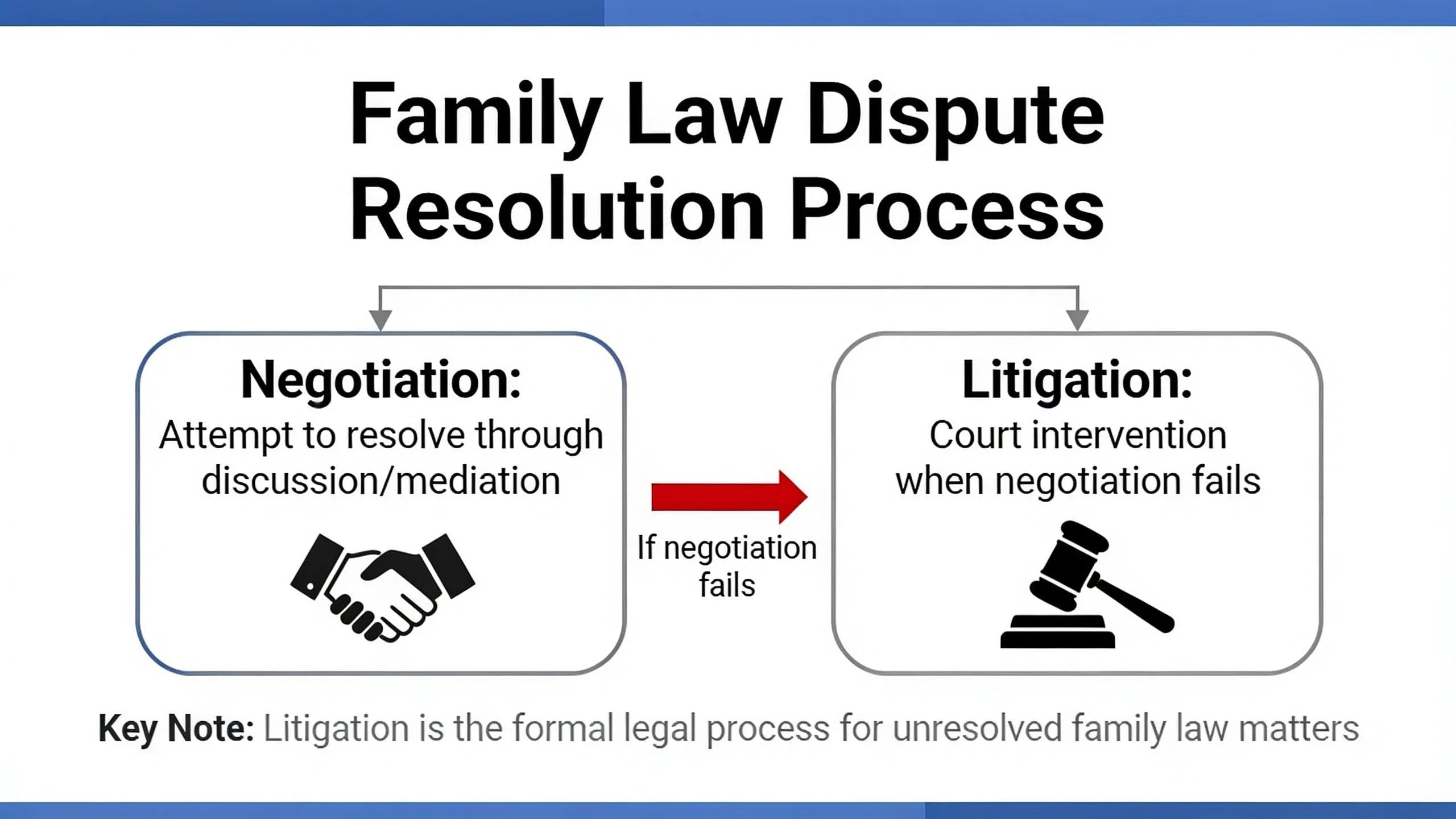
Litigation becomes the path forward when a family law matter cannot be resolved through negotiation
By Samuel Thomas Law Editorial Team · Updated 2026-08-04
Family law litigation at Samuel Thomas Law in Athens follows a structured sequence: filing petitions, discovery, temporary hearings, mediation attempts, and trial. Each stage builds toward resolving custody, support, or property disputes, with attorneys guiding clients through court deadlines and procedural requirements specific to Georgia family courts.
Family law litigation follows sequential stages: filing a petition, discovery, temporary hearings, and trial if settlement fails. Contested divorce, custody, property division, and spousal support disputes each require evidence gathering and court appearances. Samuel Thomas Law is located in Athens, Family Law, US.
Key Takeaways
- Family law litigation addresses divorce, child custody, spousal support, and property division disputes through formal court proceedings.
- The litigation process involves multiple sequential steps that can extend over months or years depending on case complexity.
- Experienced family law attorneys with 20+ years of practice guide clients through emotionally demanding and legally intricate proceedings.
- Samuel Thomas Law in Athens provides family law litigation services for clients navigating domestic disputes.
When Does a Family Dispute Become Litigation?
Litigation begins the moment negotiation and mediation fail to resolve a divorce, custody dispute, or support disagreement. Family law covers a wide selection of issues, including divorce, child custody, adoption, and mediation itself, and most cases start with an attempt to settle outside a courtroom. Once that attempt collapses, a formal family law litigation process takes over, and the matter moves onto a judge’s docket.
Not every disagreement reaches this point. Many families resolve support and custody terms through direct discussion or a mediator. Litigation becomes necessary only when both sides cannot agree, or when one party refuses to negotiate in good faith.
What Kinds of Cases Require a Family Law Litigator?
A family law litigator typically handles divorce, child custody, child support, visitation, and adoption matters. Contested cases involving property division or parenting time disputes often require court intervention when settlement talks stall.
Why Does Direct Attorney Access Matter Once Litigation Starts?
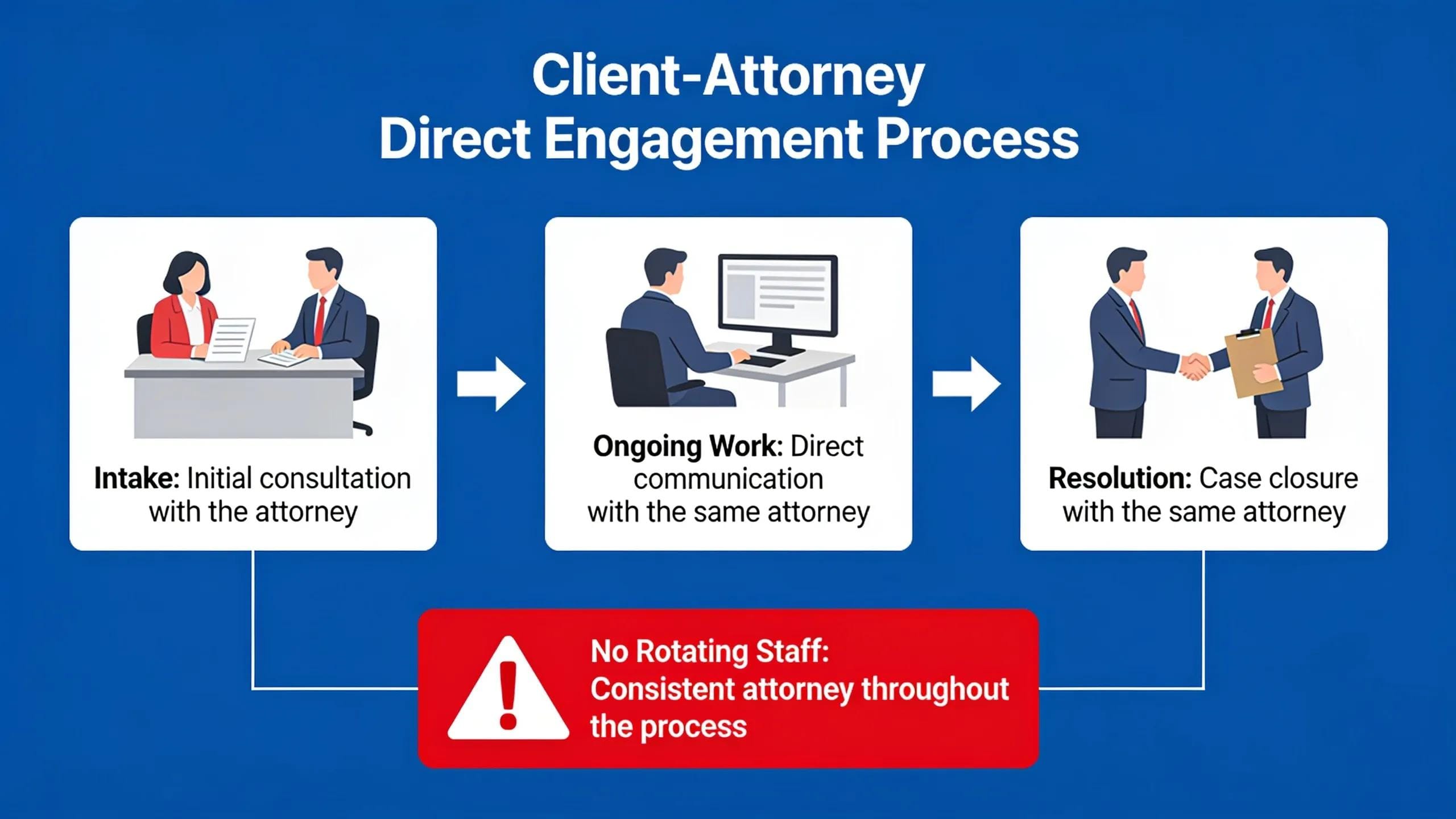
Clients facing a courtroom process benefit from working with one attorney throughout the case, not a rotating cast of staff. Direct attorney access from intake through resolution keeps strategy consistent and communication clear. A qualified family law litigation attorney who knows the full case history can respond faster when circumstances change. A dedicated family law litigation lawyer provides that continuity when stakes are highest.

What Actually Happens Once a Case Reaches Court?
Court proceedings unfold in structured phases, each demanding distinct preparation and legal judgment. Family law litigation can be a lengthy, complex, and emotionally draining process for spouses, parents, and anyone with property or custody rights at stake. Delays, hearings, and procedural requirements test patience and finances alike. Missteps at any stage can weaken a case long before trial.
No two disputes look alike, but every contested matter shares one requirement: an effective legal strategy tailored to the outcome each party seeks. A skilled family law litigator evaluates the facts early, identifies the strongest arguments, and anticipates opposing positions before filing the first motion.
How does an attorney prepare a case for trial?
A qualified family law litigation attorney builds strategy around the client’s specific facts, stated goals, and the governing state statutes. That preparation includes gathering documentation, consulting relevant precedent, and mapping out a realistic timeline for hearings and disclosures.
What should clients expect from their lawyer during litigation?
Clients working with a family law litigation lawyer should expect direct communication, not vague reassurances. Honest case assessment, paired with thorough preparation, gives clients a clear sense of where they stand at each stage.
Court litigation generally moves through these phases:
- Filing and service – initial pleadings establish the claims and legal grounds at issue.
- Discovery – both sides exchange financial records, evidence, and relevant documentation.
- Temporary hearings – judges may issue interim orders on custody, support, or asset use.
- Settlement negotiations – attorneys attempt resolution before trial when possible.
- Trial – a judge hears evidence and issues a final ruling when no agreement is reached.
Each phase carries real consequences for the outcome, making candid, prepared legal guidance essential from the first filing forward.
How Do You Choose the Right Litigation Attorney?
Direct access to the attorney separates a strong choice from a weak one. Clients facing contested divorce, custody battles, or property division disputes need a family law litigation attorney who handles the case personally, not one who hands it off to rotating staff. At Samuel Thomas Law, clients work directly with Samuel from intake through resolution.
Breadth of practice matters too. A capable family law litigator offers clear guidance across divorce, custody, contempt, adoption, and legitimation matters, so clients facing overlapping issues get consistent counsel rather than piecemeal advice.
What should clients expect from an honest attorney?
Clients deserve a straightforward case assessment, free of sugarcoating or confusion. A trustworthy family law litigation lawyer tells clients where they stand early, even when the news is difficult, so decisions get made on facts, not false hope.
Does experience in family law litigation matter for cases involving children?
Yes. An experienced family law litigation professional prioritizes the client’s best interests above all, particularly when children are involved. That focus shapes strategy, negotiation posture, and courtroom preparation throughout the case.
Family law litigation demands careful navigation through complex procedural requirements and substantive legal principles. Understanding this process empowers you to make informed decisions about your case and work effectively with your legal counsel. The stakes in family law matters are significant, affecting your rights, relationships, and future. Samuel Thomas Law remains committed to guiding clients through each phase of litigation with the expertise and dedication these matters deserve.
FAQ
When does a family dispute turn into litigation?
Litigation starts when negotiation and mediation fail to resolve divorce, custody, or support disagreements. The matter then moves onto a judge’s docket through a formal family law litigation process.
What types of cases does a family law litigator handle?
A family law litigator handles divorce, child custody, child support, visitation, and adoption matters. Contested property division or parenting time disputes often require court intervention when settlement talks stall.
Why does having one attorney throughout the case matter?
An attorney who knows the full case history responds faster when circumstances change during litigation.

courtroom
Facts
- Samuel Thomas Law is located in Athens, Family Law, US.